
The Lonely Crane on the Island
You can exist in the light and still feel like darkness.
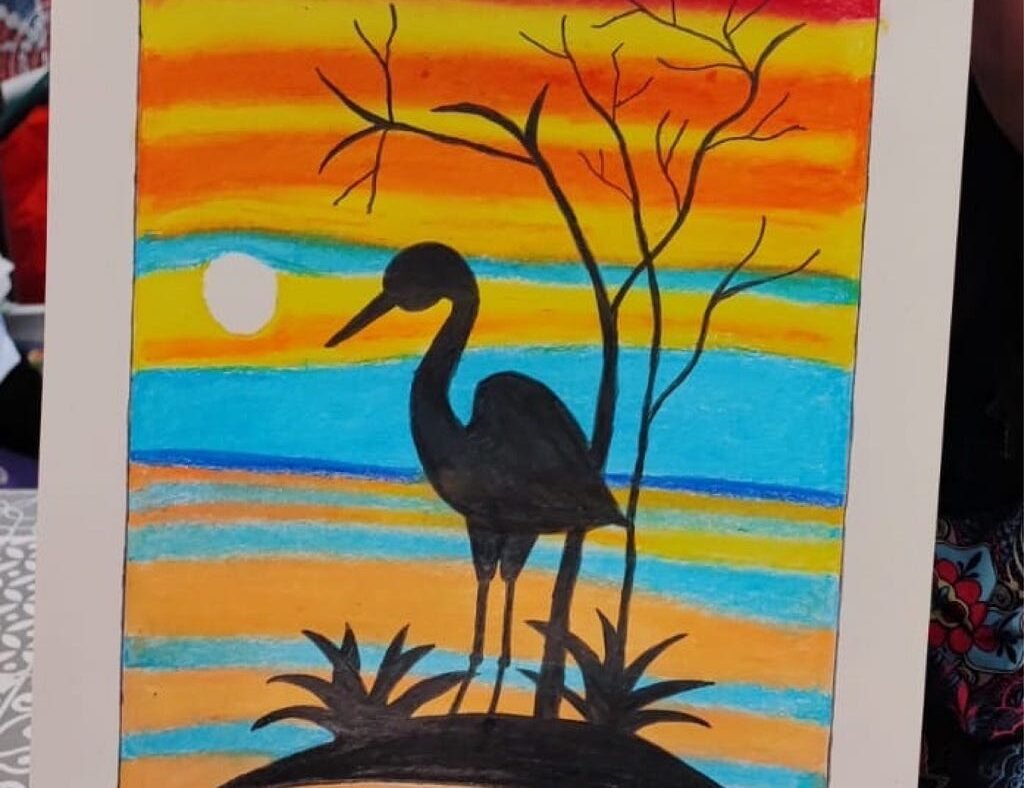
There is a crane I drew once – its shape etched in silhouette against the slow bleed of a dying sun. It stands alone on a small, forgotten island, surrounded by an ocean that speaks in whispers no one else seems to hear.
That crane is me.
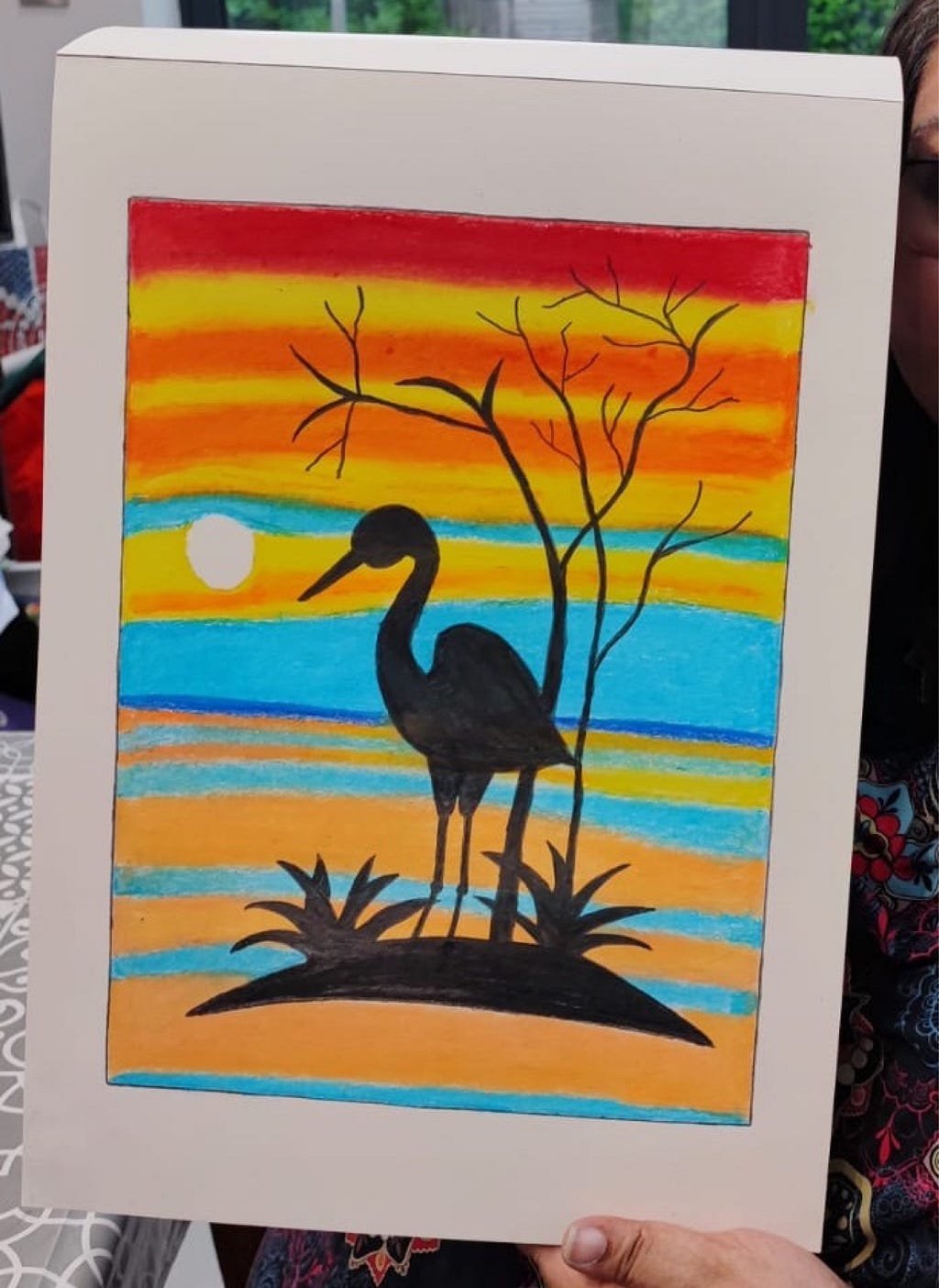
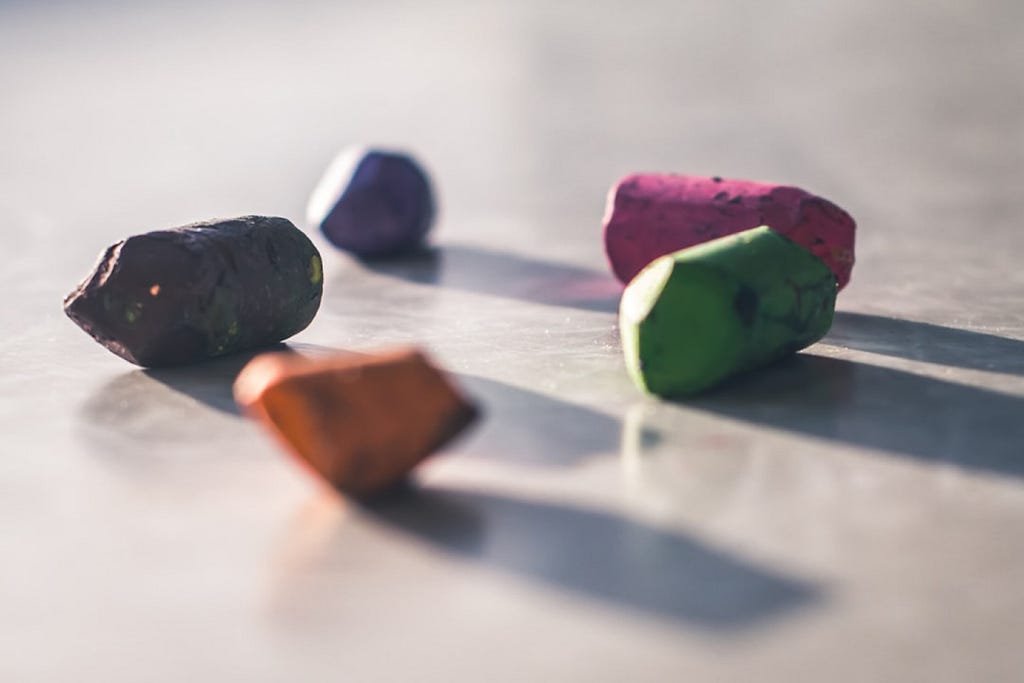
I didn’t mean for it to be. But when the oil pastels smudged and blended into the silence, I saw myself there – still, solitary, watching the world burn in hues of orange and crimson, unable to fly, or perhaps unwilling.
This island is not marked on any map. It isn’t a place, not really. It’s a state of being, I realised. A solitude that doesn’t ask for permission. A space where time drips instead of flows. Where the tides come and go but never bring anyone new. Where even the wind seems to circle rather than move on.
Some people find companionship in the noise. Others find comfort in the crowd. But some of us? We find ourselves only when all the voices are gone, and the only sound left is our own breathing. And sometimes even that feels too loud.
If this world is a prison, then yes – I am doing my time.
But I don’t resent it. There is a strange nobility in serving time when it teaches you the truth of your own soul. When each passing moment chisels away the false layers, revealing something raw and painfully real underneath. Solitude doesn’t always break us. Sometimes, it reveals the pieces we lost in the chaos.
The crane does not cry. It does not call. It simply is. And perhaps that is the deepest kind of courage – to stand in your truth, to be still, to feel it all and still remain upright in the wind.
And yet, when I look closely at the drawing, I see something else.
I see the imperfections.
A smudge here, a curve that went slightly too wide there. A spot that’s overblended. A part that stands out too starkly, white space left untouched. Things that, to anyone else, disappear into the harmony of the image – but to me, the one who drew it, the one who is it – they scream.
And isn’t that the way we see ourselves?
People tell us, “Your life is beautiful,” or “You’re doing great,” and maybe from their vantage point, it really is. The whole composition, from afar, looks serene and whole. But we – living inside the frame – only see the strokes up close. We see the raw parts, the erased lines, the corrections we tried to hide, the paint we layered desperately to make things work.
When we look at our own lives, we rarely see beauty.
We see delays. Regrets. That one conversation we keep replaying. The decision we should’ve made differently. The person we thought we’d be by now.
But that’s not the whole picture. That’s just a brushstroke.
And you can’t judge a masterpiece from inside a single line of paint.
We thrive on the details, obsessing over each flaw as if it defines the whole. We’re too close to our own canvas to see it for what it truly is: not perfect, but art.
The art we were becoming all along.
It’s like makeup in progress. It’s messy at first – too much product here, not enough there. You draw, you erase, you blend, you start over. You adapt, you improvise. You work with what you’ve got. It doesn’t look like beauty while you’re creating it. But when you step back, when you give it time to settle – it transforms. It becomes something worth seeing.
But the crane never gets to step back.
The crane only knows the view from within the drawing. And that, perhaps, is the real sadness of it all – not the loneliness, but the blindness. Not being able to see that even in our isolation, even in our flawed becoming, we are already something meaningful. And even something beautiful.
But are we too quick to judge?
I often wonder what if others see the crane and think it’s waiting for something – for a mate, for rescue, for a storm to pass. But maybe the crane isn’t waiting at all. Maybe it has accepted what it is. Maybe its silence is not sorrow, but peace.
What if this lonely island is not a sentence actually but a sanctuary?
We judge our lives by the strokes, not the story. Isolation isn’t always absence – it’s often awareness.
It’s not loneliness – it’s clarity no one else dares to feel.
Even a perfect sunset feels empty when you’re the silhouette.
Despite the external beauty, there’s an internal void. The emotional dissonance between the world’s beauty and your own inner experience creates a kind of quiet ache. You should feel fulfilled. But you don’t.
When you are the silhouette, you’re in the scene, but not of it. You’re present, but not felt – not even by yourself.
People often tell me how beautiful things are.
That my life is good, that I’m lucky, that I have sunsets most people dream of.
And I nod. I smile. I even agree, because they’re not wrong.
But here’s the thing. I’m part of the scene, yes. But only as a shape – unseen, unheld, unknowable.
And that’s the loneliness people don’t talk about. The kind where nothing is wrong, but nothing feels right. The kind where beauty surrounds you, but never touches you.
But somehow, you are still in focus. Everyone who sees the drawing sees only you, even if you are just a silhouette. We can be whoever we want, we could be smiling, crying or doing a funny pose, but it isn’t shown outside because nobody can have access to that inner sanctum of ours, we are liberated by that silhouette, but limited by it too at the same time.
And so, I sit with the crane. I let the tide whisper to us both. I don’t force a flight. I don’t demand a change.
I simply be.
And in the quiet, I hope – one day – I’ll learn to see the art I am, even if just for a moment, the way others do from afar.