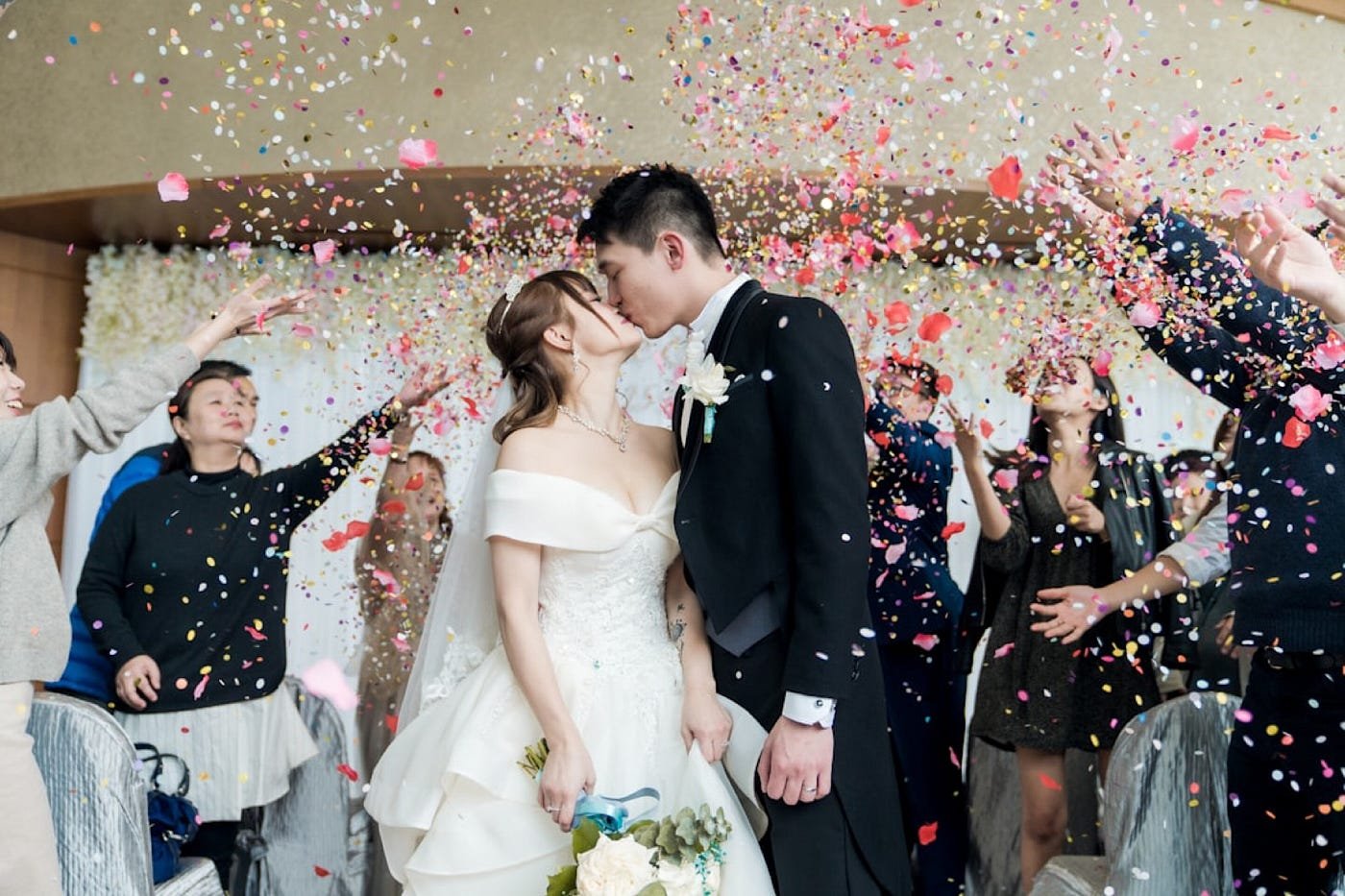

Why modern love feels harder than ever – and why both parents and singles might be right.
This is a vent. A reflection. A pause.
At Venting Cloud, we believe in voicing what’s often left unsaid, the in-between emotions, the quiet frustrations, the half-understood truths.
This piece is one of those vents. About love, marriage, and why a simple “hi – hello” has become the hardest bridge to cross.
There was a time when marriage was seen as the ultimate destination, the effervescent “happily ever after” that tied two people to purpose, family, and permanence. You grew up, got a job, got married, and that was that. Today, that promise feels like a fading myth. The number of unmarried adults is higher than ever, not because love disappeared, but because the idea of marriage itself has evolved, perhaps a bit too much, or maybe not enough.
There’s a growing sense among today’s youth that marriage is either a fading myth or a looming curse. Yet perhaps what’s really happening is not its end, but a metamorphosis: the concept of marriage has changed so much, and in doing so the expectations around it have grown both more intense and more ambiguous.
Why is this happening? One way to frame it: marriage has undergone a dual transformation. Marriage used to be a social contract, not a spiritual calling. It was about survival, legacy, and stability. Feelings were a bonus, not a foundation.
Then came the modern age, with love songs, cinema, Instagram declarations et all; marriage became a theatre of passion and self-expression. We romanticised it so deeply that we began to expect it to fulfil every emotional and intellectual need.
But did that make it too romantic, or did it actually unhinge romance from reality?

On one side: the romanticising of marriage. For many, the idea is that marriage should deliver everything: love, passion, equal partnership, fulfilment, identity, belonging, growth. The romantics among us imagine that the spouse will be the best friend, therapist, adventure-partner, parent of our kids, co-CEO of our lives. In that sense it’s more romantic than it used to be: we expect emotional depth, personal growth, alignment of values, social platform, even self-actualisation.
On the other side: the calculation of marriage. With more education, more exposure, more autonomy, more choice, marriage becomes less about “somebody I can live with” and more about “somebody who matches me in X, Y and Z”. Compatibility checklists, dating apps, life-goals, “we must both have careers, we must both be financially independent, we must both travel, we must both”…. So marriage turns into a complex equation. In that sense it becomes more rational (or rather more transactional) than it used to be.
Which of the two dominates? Hard to say and maybe that’s part of the outcome. It might be that both are happening at once: marriage got both more romantic and more calculating, and as a result it has become harder to commit.
If by calling marriage a “myth” we mean the idealised fairytale version – “we’ll live happily ever after, no friction, no compromises, we’ll grow together effortlessly” – then yes, perhaps that version is largely mythic. The expectation that one person solves all your emotional needs, removes all your loneliness, provides perfect companionship is unrealistic. When the myth is too seductive, disappointment looms.
Suppose we decide to call marriage a curse, I would like to think then that’s more dramatic. Is marriage inherently bad, a chain, a trap? Not on its face. But when the mismatch between expectation and reality becomes wide, when the burden of “perfect partner” becomes too heavy, when financial strains, personal development, changing gender norms all collide, marriage can feel like a risk or a burden. In one sense it becomes harder to commit because the cost (emotional, temporal, financial) seems higher.

Consider the generation of our parents or grandparents. For many, marriage was more a transition than a dream. It might have carried some romantic ideas, but often the dominant narrative was simpler: find a partner, settle down, start a family, build a home. Expectations were maybe vaguer. The social script was established. You got married, made it work, learned together. Adaptability mattered. The stakes might have been high, but the imagination of marriage was less overloaded with possibilities.
Whereas today’s generation thrives on choices. When you expect your partner to fulfil many roles, you become less willing to compromise.
Some might argue: our parents’ generation had “vague expectations” and so the marriage was more adaptable. Yes, there’s truth here. If you expect less, you may have more room to grow into your roles. When family ties, community support, shared values were stronger, the system provided scaffolding. The “arranged marriage” model (where families selected partners, and the couple then adapted) provided a certain momentum.
But that doesn’t mean those marriages were easier or better. They carried their own burdens: less individual choice, more pressure, often more sacrifice of personal desires. The point isn’t to idealise them but to recognise that expectations were lower (or less explicit) and the social context was different.
In India, where traditions still hold weight and change happens unevenly across urban/rural, caste/class, regions, this shift is especially visible and fraught. Across living rooms and family WhatsApp groups, parents play modern matchmaker. They introduce their children to suitable prospects through friends, colleagues, matrimonial apps, even extended relatives and cheerfully say, “Just talk and see!”. They share biodata PDFs and cross-check families with earnest enthusiasm, hoping something clicks.
But often, it doesn’t. Conversations start with polite “hi – hello,” a few exchanges about hobbies and career, maybe a brief video call and then silence. The prospect fizzles before it even begins.
For many parents, this is infuriating. They can’t fathom why, when everything is easier such as education, exposure, communication, their children can’t just decide. “We met once, and that was enough,” they say, bewildered by a generation that overthinks every interaction.
Their frustration often comes from love, but also from a worldview built on clarity: marriage as a natural next step. For them, uncertainty is indulgent; for their children, it’s necessary.
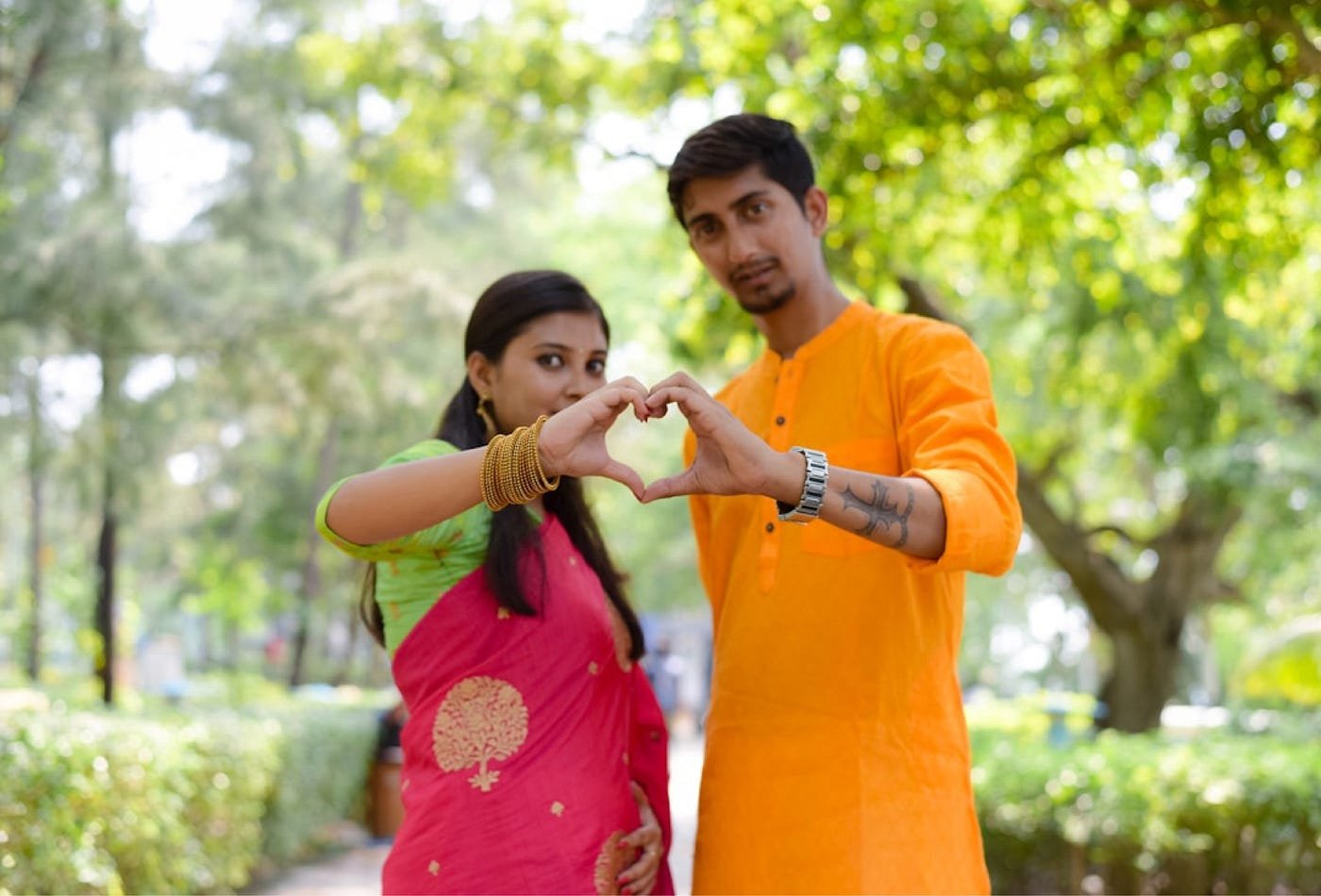
For young people, the story feels different. They aren’t rejecting marriage itself….they’re rejecting the version of marriage offered to them. The fear isn’t of commitment, but of committing wrong.
They live in a world where every decision feels monumental: one wrong partner can derail your emotional, financial, and personal life. The older generation married within narrower social circles; today’s youth meet people from vastly different worlds, values, and ambitions. Compatibility feels like a moving target.
And yet, there’s fatigue. Many singles report the same pattern seen everywhere, be it an arranged call or meet up or a bar conversation – short conversations that never deepen. Why? Because the process has become transactional and performance-driven. You’re simultaneously trying to impress, assess, and protect yourself. There’s little room for spontaneity or discovery.
“Hi – hello” messages die out not always because of disinterest, but because both sides subconsciously expect an instant spark or a sense of certainty. When that doesn’t come, they retreat.
Today’s dating and arranged marriage landscape has freedom, but little framework. We meet easily, but connect shallowly. We talk often, but reveal little. We expect “instant compatibility,” but real intimacy grows through imperfection and time.
This results in paradox of too many options, too much self awareness but too little patience and courage to proceed forward.
Maybe both generations are missing something.
“Foresight without empathy becomes pressure.
Motivation without realism becomes paralysis.”
And somewhere between those two, perfectly good connections die before they even begin.

Marriage isn’t dying; it’s being redesigned. Parents still believe in its stability; children want it to feel like freedom. Both sides are right, but neither has the full picture.
There’s no formula, but perhaps the next step begins where clarity replaces fantasy. The two generations of talkers and over thinkers have to stop evaluating at the first instant and start listening to each other where differences feel intriguing, not threatening.
We as a generation of self-curators and left or right swipers, will need to realise that marriage is not about the absence of problems but the presence of commitment. Because commitment isn’t about certainty; it’s about choosing despite uncertainty.
Maybe the solution lies in accepting that marriage is no longer a destination – it’s a journey negotiated between two evolving individuals. Families may be part of it, but they do not become the centrifugal force of it. The power of decision making has now passed from the family members to the bride and groom themselves. The myth is not that marriage is sacred or doomed. The myth is that it should be easy.
In the end, what we’re missing isn’t love, rather it’s the willingness to let it grow slowly, imperfectly, and bravely in a world that keeps telling us we can always find something better. Parents fear their kids might be lonely. Kids fear they’ll be trapped. Both are trying to avoid pain, not realising that no version of love comes without it.
In conclusion, marriage is evolving, a metamorphosis of becoming something new yet resonating something old. Parents still see it as stability; for them, commitment meant security. Children want it to feel like freedom; for us, commitment comes after security – emotional and financial.
Same goal, different timeline.
The real challenge isn’t to resurrect the old myth or escape the supposed curse. It’s to rewrite the promise: that marriage is not about perfection, but about partnership. Not about forever, but about continuing to choose. The patience to see beyond first impressions, to let love build and become what it’s meant to be, and not just what we imagined it should be.
Marriage is no longer a default destination, it is a deliberate decision, one that can only be made by the ones partaking in it.
At Venting Cloud, we’re not here to give solutions. We’re here to name the ache… to say, yes, it’s complicated, and no, you’re not alone.
Turns out, marriage is more akin to cloud building, changing shape and evolving before it rains clarity; and you’re not late, you’re just not settling for bad weather.
That ends our forecast… I mean podcast for today, don’t forget to keep checking the weather here at Venting Cloud.